Arterial Ulcers & Gangrene
Wound Care · Life Eugene Marais Hospital, Pretoria
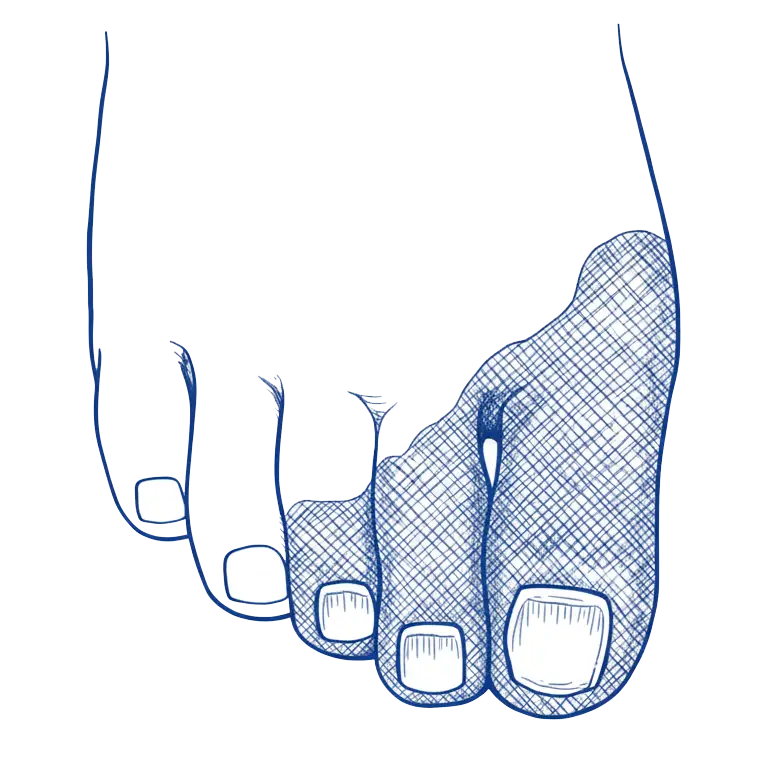
Patients with arterial ulcers have an inadequate supply of oxygen-rich blood to the limb, usually due to peripheral arterial disease. Gangrene — the death of tissue — is the most serious consequence of this reduced blood supply.
Important: All patients with gangrene must be referred to a vascular surgeon immediately. Do not wait — contact us at once.
Where possible, arterial ulcers are initially treated conservatively. If conservative wound care does not deliver the needed results, it may be necessary to improve the arterial supply.
Diagnosis at our practice
A complete medical history and clinical examination is followed by a hand-held Doppler examination to determine whether the arterial supply to the limb is adequate. Where indicated, arterial and/or venous duplex-Doppler studies are performed to confirm the diagnosis. We also have specialised equipment for transcutaneous oxygen measurement (TcPO2), which establishes exactly how much oxygen is available at the wound for healing.
Treatment
- Conservative wound care — where the blood supply allows, the wound is first treated conservatively.
- Arterial revascularisation — Dr Weir is a vascular surgeon and will discuss the surgical and endovascular options (such as balloon angioplasty or bypass) with you, deciding on the best intervention together.
- Hyperbaric oxygen therapy — in selected cases, as an adjunct after revascularisation, to support tissue recovery.
- Limb salvage — our focus is saving the limb; early referral makes the greatest difference.
Educational videos
 Treat PVD Like Arterial Cancer — Introduction
 Unblocking Your Arteries — Explainer Video
 PAD — The Hidden Danger — Explainer Video
Frequently Asked Questions
What are the signs of an arterial ulcer?
Arterial ulcers are often painful, occur on the toes, feet or pressure points, and the surrounding skin may be cold and pale. Calf pain on walking (claudication) or rest pain at night may also occur.
Is gangrene an emergency?
Yes. All patients with gangrene must be referred to a vascular surgeon immediately. Early revascularisation can mean the difference between saving the limb and amputation.
Can the blood supply be restored?
Often, yes — with balloon angioplasty, stents or bypass surgery. The appropriate option depends on your specific situation and is discussed with you after a full vascular assessment.
Do you have a chronic wound that will not heal?
Tel: 012 335 8651 · WhatsApp: 061 520 4140 · Email: [email protected]
Please note that we can only treat patients with active medical aid cover.