Venous Stasis Ulcers
Wound Care · Life Eugene Marais Hospital, Pretoria
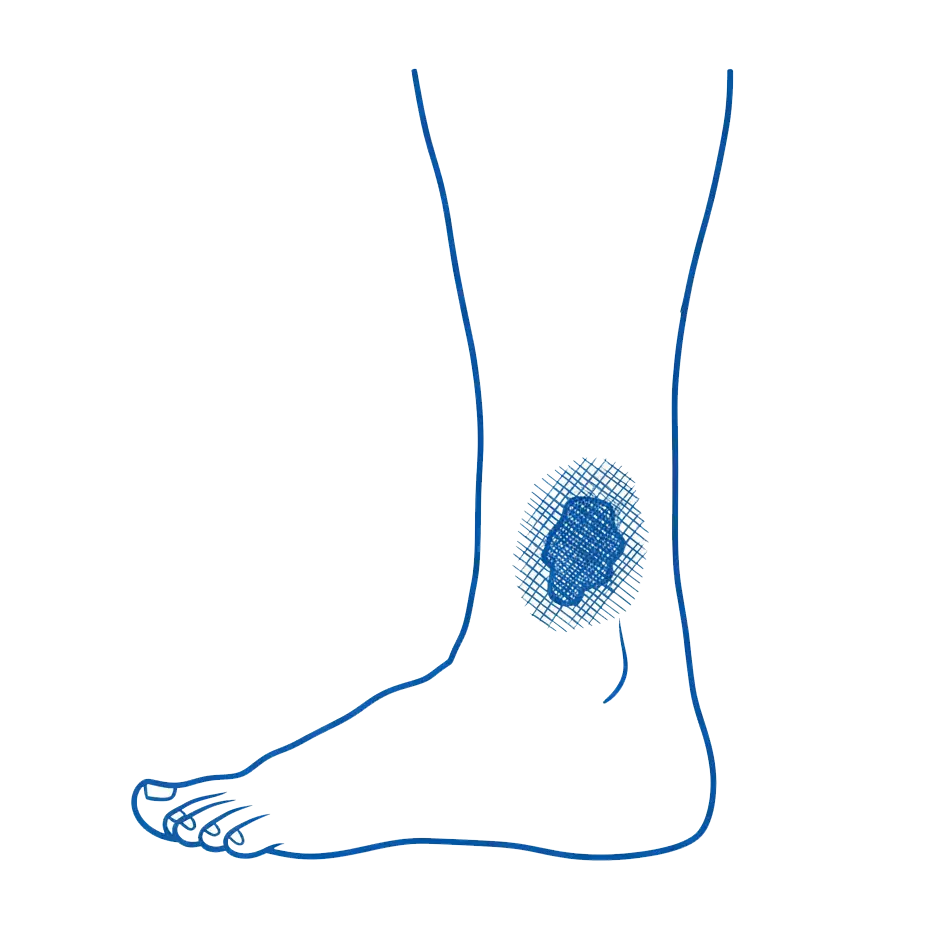
Venous stasis ulcers are responsible for the great majority of lower-leg ulcers. They often arise from poor return of venous blood from the lower legs back to the heart. Patients frequently have a history of varicose veins and/or previous deep-vein thrombosis.
These wounds typically occur around the ankle, are often wet (exuding), and can struggle to heal for months or years if the underlying venous problem is not addressed.
Diagnosis at our practice
A complete medical history and clinical examination is followed by a hand-held Doppler examination to determine whether the arterial supply to the limb is adequate. Where indicated, arterial and/or venous duplex-Doppler studies are performed to confirm the diagnosis. We also have specialised equipment for transcutaneous oxygen measurement (TcPO2), which establishes exactly how much oxygen is available at the wound for healing.
Treatment
- Compression therapy — compression bandages and stockings form the cornerstone of venous ulcer treatment, provided the arterial supply has first been confirmed as adequate.
- Basic and advanced wound care — expert wound management by our team, including negative-pressure wound therapy (VAC) where indicated.
- Venous assessment — where needed, venous duplex-Doppler studies are performed and further treatment options discussed with you.
When should you seek help? If your wound does not improve within 7 days of appropriate basic wound care, you need a wound care specialist. If the wound has not improved as expected after 6 weeks of specialist care, you need a consultation with a vascular surgeon.
Educational videos
 Venous Leg Ulcers
 EWMA — Management of patients with venous leg ulcers
 Decoding Your Veins — Explainer Video
Frequently Asked Questions
Why do venous ulcers occur around the ankle?
Pressure in the venous system is highest near the ankle when the return of blood to the heart is impaired — which is why most venous ulcers develop in this area.
Is compression bandaging safe?
Compression therapy is the cornerstone of venous ulcer treatment, but the arterial supply must be confirmed first — which is why we perform a Doppler examination before applying compression.
Will my ulcer come back?
Venous ulcers tend to recur if the underlying venous problem is not addressed. Long-term compression stockings and follow-up reduce the risk considerably.
Do you have a chronic wound that will not heal?
Tel: 012 335 8651 · WhatsApp: 061 520 4140 · Email: [email protected]
Please note that we can only treat patients with active medical aid cover.